State Governments Balance Social Spending With Fiscal Deficits and Borrowing

Indian state governments face a complex task in managing fiscal health while maintaining high expenditure on essential social and economic sectors. The majority of state funding is allocated toward health, education, agriculture, and irrigation, which are critical for long-term development. Kerala serves as a primary example, where consistent public investment has fueled social progress since the 1960s. However, because revenue receipts often fall short of these ambitious expenditure goals, states must frequently bridge the financial gap through market borrowings. This reliance on debt necessitates a careful fiscal balancing act to ensure sustainable growth without compromising essential public utility services.
This summary was generated by PolitGlobe's AI pipeline from publicly available reporting at The Hindu. For the full original article, visit the source below.
Read full article at The HinduRelated coverage

Over Two Million Devotees Gather for Nellore Rottela Panduga Festival
More than 20 lakh devotees participated in the Rottela Panduga festival held at the Bara Shaheed Dargah in Nellore, Andhra Pradesh. The annual event, known for its tradition of exchanging rotis (bread) as a gesture of fulfillment of vows and communal harmony, saw massive crowds gathered along the banks of the Swarnamala river. During the festivities, Andhra Pradesh State Endowments Minister Anam Ramanarayana Reddy attended the dargah to offer special prayers. Local authorities managed the large-scale logistics to accommodate the influx of pilgrims celebrating this unique multi-faith religious gathering.

Congress Leader Venugopal Criticizes BJP Governance Ahead of Bengal Polls
In a recent political address, senior Congress leader K.C. Venugopal criticized the Bharatiya Janata Party (BJP), asserting that their potential governance in West Bengal would mirror what he describes as a disregard for constitutional values seen elsewhere in India. Venugopal accused the BJP of seeking to undermine the livelihoods of common citizens and failing to uphold democratic principles. His remarks come as political tensions rise in the state, with the Congress articulating a stance that positions the BJP as a threat to the existing socio-economic fabric and national constitutional integrity.
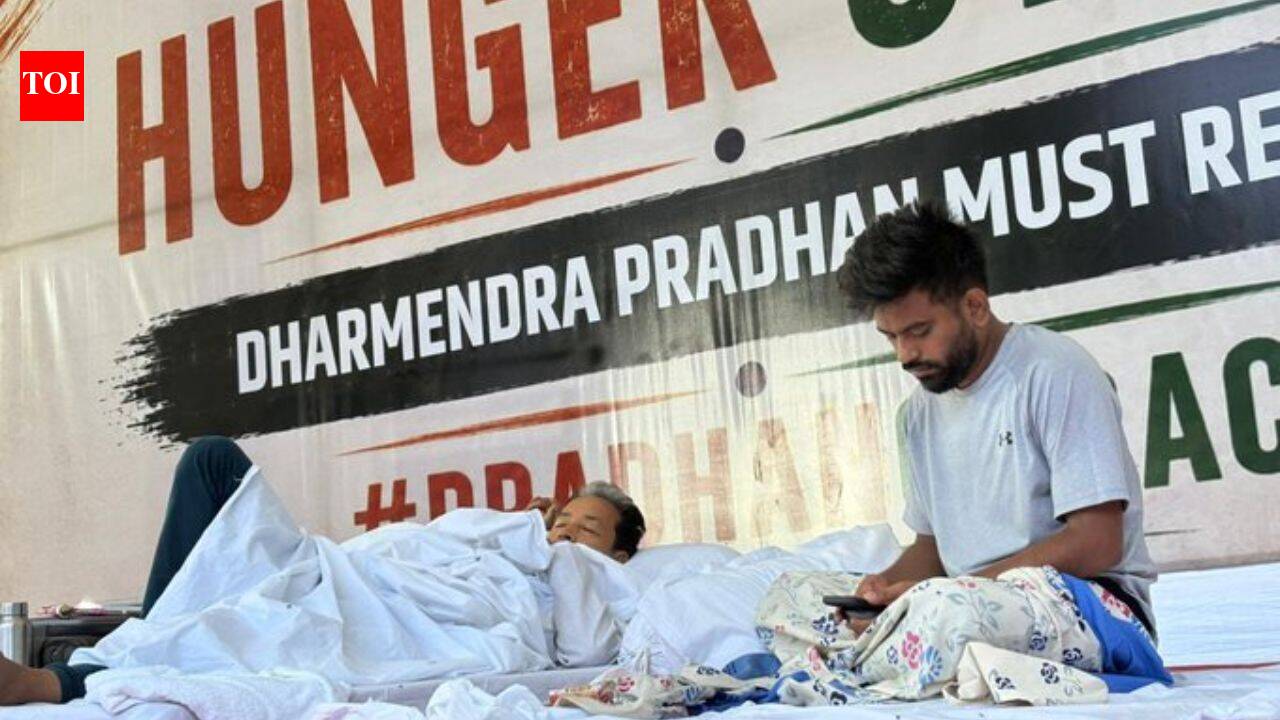
Ladakh Reform Activist Sonam Wangchuk Enters Day 4 of Hunger Strike in Delhi
Environmental activist Sonam Wangchuk has reported a weight loss of two kilograms as his hunger strike enters its fourth day in New Delhi. Wangchuk is leading about 150 protesters from Ladakh who were recently released from police custody following their 'Delhi Chalo' march. The group is demanding a meeting with India's top leadership to discuss constitutional safeguards for Ladakh under the Sixth Schedule and statehood for the Union Territory. Despite deteriorating health conditions and cold weather, the activist remains committed to the protest, emphasizing the need for environmental protection and democratic representation for the Himalayan region.
Haryana, Punjab, and Goa Lead Implementation of India's New Criminal Justice Laws
The states of Haryana, Goa, and Punjab have emerged as leaders in the national rollout of India’s three new criminal laws: the Bharatiya Nyaya Sanhita, Bharatiya Nagarik Suraksha Sanhita, and Bharatiya Sakshya Adhiniyam. These states have successfully modernized their judicial and policing infrastructure to align with the new legal framework which replaced colonial-era statutes. The implementation includes widespread training for police personnel and the integration of digital systems for forensic evidence and case management. Federal reports indicate these regions are successfully meeting transition deadlines, setting a benchmark for other states in the comprehensive overhaul of the country's criminal justice system.